Saturday, August 6, 2011

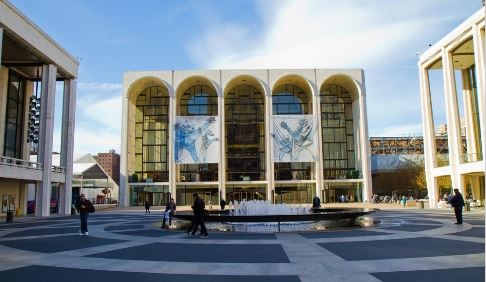
Iwalked New York City’s Avery Fisher Hall

Iwalked New York City’s Avery Fisher Hall - Avery Fisher Hall opened as Philharmonic Hall on September 23, 1962. It was designed by the firm of Harrsion & Abramovitz with the consulting of audio specialists Bolt, Beranek and Newman. Per the advice of Bolt, Beranek and Newman the original designs consisted of a narrow rectangular design similar to Boston’s Symphony Hall with a maximum capacity of 2,400 seats. Caving to pressures to expand this capacity to just over 2,700, these designs were altered which ended up materially altering the acoustics. Critics immediately panned the new hall and musicians meanwhile complained that they couldn’t hear themselves play. Alterations began almost immediately to attempt to tweak the existing structure. After multiple failures, a complete overhaul was finally conceded. Through a $10.5 million donation via Avery Fisher, the hall reopened in October 1976.

Avery Fisher Hall
Avery Fisher Hall

Avery Robert Fisher is described as an audio specialist. He is perhaps best known for his stereo designs which led to significant improvements in existing AM-FM tuners.
Despite the significant alterations in 1976, critics still did not embrace the new Avery Fisher Hall. Finally in 1992 and then again in 2005, further renovations were undertaken. Alas a formula seems to have finally been found as Fisher Hall is now recognized for having excellent acoustics once more.

The primary beneficiary of the enhanced acoustics is the hall’s primary tenant—America’s oldest orchestra by nearly forty years, the New York Philharmonic. The Philharmonic traces its earliest roots back to 1842 when it provided its first concert on Broadway to an audience of 600 individuals. The first work performed that evening? Beethoven’s 5th Symphony. Since that initial performance the Philharmonic has gone on to perform over 15,000 concerts as of May 2010. They currently perform about 180 concerts per year.

Similar to the Met’s PBS specials and in trying to keep with the times, the Philharmonic began releasing a subscription-based download series via iTunes in 2009. From this subscription, listeners were able for the first time to get numerous works previously unavailable. Overall, the Philharmonic has recorded over 2,000 works since their first recording in 1917. Of these recordings, approximately one-fourth of them are commercially available.
If you’re interested in attending a performance and cost is a concern, you may attend rehearsals here every Thursday morning on the evenings of performance at 9:45a.m. Rehearsals cost about $18 to attend versus the evening performance which currently goes for about double that at $40. Rehearsal tickets may be purchased online at www.nyphil.org or at the door.

The New York Philharmonic is not the only body however which utilizes this facility. A number of local high school and colleges host their graduation ceremonies here. And on January 22, 1967, Avery Fisher Hall was where Simon & Garfunkel recorded Live From New York City, 1967
Tuesday, July 26, 2011

Iwalked New York City’s Jerry Seinfeld and Cosmo Kramer Apartment

Iwalked New York City’s Jerry Seinfeld & Cosmo Kramer Apartment - This building is the address provided in the television series Seinfeld as the location of the Shelby apartments where Jerry Seinfeld and Cosmo Kramer call home. Obviously upon inspection this building is not used for any of the exterior shots in the show. That building is actually located in Los Angeles at 757 South New Hampshire Avenue. This address is, however, where a young and up-coming Jerry Seinfeld did formerly reside as he was beginning to make a career as a stand-up comedian here in New York.

To read about Jerry’s current real home at the Beresford on Central Park West, read here.

Jerry Seinfeld & Cosmo Kramer Apartment

  • Website: http://www.nyc10best.com/culture-history/10-best-places-and-locations-from-the-seinfeld-show-in-new-york-city/
  • Address: 129 West 81st Street, New York City, NY
  • Cost: Free.

Thursday, July 7, 2011

Iwalked New York City’s St. Paul’s Chapel

Iwalkedaudiotours.com - The Episcopal church of St. Paul’s Chapel is the oldest surviving church in New York City. The initial chapel was constructed in 1766 as a chapel of ease for those individuals who lived north of the city and were unable to attend Trinity Church just a quarter of a mile to the south.
St. Paul’s Chapel
St. Paul’s Chapel
The church was built in a much less elaborate Georgian style and made to face the Hudson River which was then located just two blocks to the east. It was constructed on Manhattan mica-schist. The octagonal steeple with two bells was erected in 1794 and designed by James C. Lawrence who was paid the handsome sum of $25 for his efforts. It was around this time that the entire building including the brownstone trim were coated in white paint before reverting to its more natural and current appearance in 1840.

St. Paul’s is the site, where on April 30, 1789, that George Washington attended service immediately after taking his oath of office at Federal Hall. While Trinity Church may seem like a more natural selection, Trinity was at the time a victim of the Great Fire of 1776 and in the process of being rebuilt. St. Paul’s had survived this devastation via a bucket brigade, which may provide some insight as to why it and not Trinity, is the oldest church in New York City. The pew where Washington sat in 1789 is now roped off along the northern wall for viewing if you visit the interior. This box has only been used once since this time when, in 1989, then President George H.W. Bush attended a mass here in honor of the bicentennial of establishment of the US presidency.

For its 200 plus years of existence St. Paul’s has largely maintained much of its original design. In 2007 it made perhaps one of its most significant changes, however, when it decided to remove all of the pews to create a more open space for worship.

Of course, St. Paul’s is also known for its close association and proximity to the events of 9/11. It has been described by many as “the little chapel that stood” for amazingly, through all of the dust and debris it did not suffer even a single broken window. During the subsequent clean-up efforts, St. Paul’s served as one of the major volunteer centers for which 14,000 people assisted. The iron perimeter fence during this time was also an often recorded site as family members posted pictures here searching for missing loved ones.

While walking around the yard at St. Paul’s take some time to admire the oak statue which resides just atop the Ionic columns on the front façade of the building. This statue is of St. Paul the apostle who is recognized as one of the primary authors of the New Testament. If you are doing this walk between the hours of midnight and 1a.m., then keep your eyes peeled to see if this statue comes alive. Various legends and tales have arisen over the years telling of how this statue would leave its perch and either come to greet onlookers or else make its way to a nearby water pump and refresh its parched wooden pallet.

From the rear of the chapel direct your attention to the center window. This is the back side of the alterpiece titled “Glory” which was designed by the same man who created the layout of Washington D.C., Pierre L’Enfant. While you may obviously get a better view from the inside of the chapel it is interesting to note from the backside that you can see the thirteen rays of light (representing the then thirteen colonies) emitting from the sun of the sculpture.

Also right within this vicinity (behind the chapel) is a large bell known as the Bell of Hope. It was presented to St. Paul’s by the Lord Mayor of London in September 2002. The bell was cast at the oldest manufacturing company in all of England, and the same foundry which cast the 13.5 ton bell for Big Ben in 1858 and the Liberty Bell in 1752, the Whitechapel Bell Foundry. Every year on September 11, the bell is rung.

If you want to spend a bit more time to take in the interiors of St. Paul’s Chapel feel free to do so. Admission is free and it is open 10am-6pm Mon-Fri, 10am-4pm Saturdays and 7am-4pm Sundays.

  • Website: http://www.trinitywallstreet.org/congregation/spc/
  • Address: 209 Broadway, New York City
  • Cost: Free.
  • Hours: Mon-Fri 10am-6pm; 10am-4pm Sat; 7am-4pm Sun

Iwalked Boston’s Freedom Trail

Iwalkedaudiotours.com - The Freedom Trail is Boston’s most famous and historic walking trail. It was the product of a Boston columnist by the name of Bill Schofield who came up with the idea in March of 1951 in an article in the Evening Traveler. After much promotion, the city formally implemented the trail in June of 1951, although the red paved path was not added until 1958.
Boston’s Freedom Trail
This brick-paved or red painted path extends approximately 2.5 miles throughout the city and connects seventeen historical sites related to the American Revolution. Those sites include:

1. The Boston Common
2. The Massachusetts State House
3. Park Street Church
4. Granary Burying Ground
5. King’s Chapel
6. King’s Chapel Burying Ground
7. Benjamin Franklin Statue & Old Latin School
8. Old Corner Book Store
9. Old South Meeting House
10. Old State House
11. Site of the Boston Massacre
12. Faneuil Hall
13. Paul Revere House
14. The Old North Church
15. Copp’s Hill Burying Ground
16. Bunker Hill Monument
17. U.S.S. Constitution

Just a tip, of these seventeen sites, while only three advertise admission fees (the Old South Meeting House, the Old State House and Paul Revere House) you may be expected to provide a donation at some of the churches (including Kings Chapel and the Old North Church).

Parkman Plaza within the Boston Common is the official starting point for the Boston Freedom Trail. Within the Visitors Center (which opened in 1966) you can pick up a free map if you wish to do a self-guided tour. Per the Freedom Trail website it is estimated that some 500,000 maps are disbursed annually.

From the Visitors Center you may also join a guided tour led by individuals in 18th century costumes. The guided tours are usually about an hour and a half, although if you really wish to spend time at even a handful of the sites, I would allow yourself a majority of a day to do so.

One final option on doing the Freedom Trail is if you go to their official website you can download an audio tour which provides full theatre to each of the attractions.

  • Website: http://www.thefreedomtrail.org/
  • Address: Boston Common, Boston, MA. Trail begins at Parkman Plaza. Near the intersection of Tremont Street and West Street.
  • Cost: Free.

Wednesday, July 6, 2011

Iwalked New York City’s Will and Grace Apartment

Iwalked New York City’s Will & Grace Apartment - Television fans of the 1998-2006 series Will and Grace may recognize the 12-floor apartment building at 155 Riverside Drive. It was the exterior for this building after all which represented the former shared apartment of the gay lawyer Will Truman and interior designer Grace Adler.
Will and Grace Apartment
The television series aired for eight seasons and 194 episodes peaking at number nine on the Nielson TV rankings in 2001-2002. The show was known for exploring the homosexual lifestyles of Will and his friend Jack McFarland (aka “Just Jack” to many of us).


  • Website: http://www.durfee.net/will/locs_Riverside.htm
  • Address: 155 Riverside Drive, New York City
  • Cost: Free.

Friday, July 1, 2011

Iwalked New York City’s Ghostbusters Building

Ghostbusters Building - 55 Central Park West is known by many simply as the Ghostbusters Building, as it was the location where Sigourney Weaver’s character classical musician Dana Barrett lived on its 22nd floor. At the 1984 film’s climatic ending we see the Ghostbusters gang battle the demi-god Zuul atop the rooftop. All of these rooftop scenes, however, were filmed in at the Warner Brothers studios in Burbank, California. This apartment co-op was purely used for exterior shots.

When producers of the film initially began their hunt for an apartment that had the right paranormal look or feel, 55 Central Park West was actually not their 1st choice. The producers had their hearts set on an Art Deco apartment in the Village located at 1 Fifth Avenue. The building’s co-op, however, politely declined the opportunity.

Ghostbusters Building
In the film, Ghostbusters, it is mentioned that this building was designed by an insane architect named Ivo Shandor in 1920. In actuality it was designed by a quite sane firm named Schwartz & Gross who built the 19-story Art Deco structure in 1930. When it was introduced in 1930, 55 Central Park West was actually the 1st Art Deco building in the area. It opened initially as an apartment offering units with 1-4 bedrooms and was largely considered second-class amongst many of its more elite neighbors.

The building is now a 109-unit cooperative building and has taken on a bit more prestige. Current and former tenants have included the likes of Ginger Rogers and Calvin Klein. Not surprisingly, the most desired apartments are the top floor units of 19 and 20F which comprise a 4,500 square foot space with 11’ ceilings and 1000 square foot terrace.

One subtle but fascinating aspect to the building’s exterior its brick pattern. Start at the 1st floor and slowly move your gaze upwards. You should notice that the brick pattern begins with a dark red at the base and slowly gets lighter to a more yellowish hue at the top. This intentional trick actually makes use of approximately forty different colored bricks to leave the impression that the building is constantly in sunlight as it shines through the trees of Central Park.

We should also not forget that Dana Barrett of Ghostbusters is not the only famous fictional character to have resided at 55 Central Park West. Fans of the 2003 film Elf may recognize this building as where Buddy the Elf pays a surprising visit to the home of his estranged father, Walter.

  • Website: http://en.wikipedia.org/wiki/55_Central_Park_West
  • Address: 55 Central Park West, New York City, NY
  • Cost: Free

Tuesday, June 7, 2011

Iwalked Boston’s Haymarket

Iwalkedaudiotours.com - Haymarket is an open-air fruit and vegetable market open every Friday and Saturday morning at the approximate intersection of Hanover Street and Blackstone Street. In this market, which dates back to around 1830, you will find dozens of push carts and stands selling some of the cheapest produce in town. The reason that you are able to buy these goods at such a low, low price is that these items are typically acquired by the vendors from wholesalers needing to make space for newer and fresher shipments.

Boston’s Haymarket
Boston’s Haymarket
While the produce may not be the freshest off the vine, the quality is still sufficient enough to draw large crowds here every weekend. A large reason for the attraction, and part of the charm of Haymarket, is the ambience. You have vendors yelling at each other, yellowing at the crowds, and it’s just a very festive atmosphere.

Haymarket has been such a long standing tradition in Boston that even when the Big Dig was performing construction in the area; crews were forced to shut down at 2pm every Thursday so as to allow vendors to begin setting up for the next day. This being a project, mind you, that at its peak was operating at a cost of $3 million per day. All shut down to allow the sale of 99 cent fruits and vegetables.

If you find yourself in the area either during the market or some day in-between, there is a wonderful sculpture embedded into the concrete to take notice of. Embedded into the pavement are little brass pieces of fruits and vegetables that are the symbolic work of Mags Harries. This work was originally created in 1976. Some 30 years later additional symbols such as mushrooms were added. The work is titled Asaroton and, quite fittingly for this area, means “unswept floor.”

  • Website: http://en.wikipedia.org/wiki/Haymarket_Square_(Boston)
  • Address: Intersection of Hanover Street & Blackstone Street (address is approximate), Boston, MA
  • Cost: Free to visit. Cheap produce is extra

Monday, June 6, 2011

Iwalked Boston’s Zero Marker – The Boston Stone

Iwalkedaudiotours.com - If you glance at about ankle height you will find embedded in the brick wall a small hollow stone that measures about two feet long. This infamous stone is known as the Boston Stone which was brought over from London in the year 1700 by a painter named Tom Childs. No word on whether baggage fees were associated with bringing the stone stateside.

The Boston Stone
The Boston Stone
Mr. Childs formerly had a shop here and used the stone as paint grinder. Originally the stone was four times its current size before being broken on some four separate occasions. In 1737 the stone was embedded within the brick wall and a stone trough was added to keep carriage wheels from striking the location.

Many sites will have you believe that this stone was once the Zero marker—that being the point from which all distances to Boston were measured. This, in fact, has never been the case. The Massachusetts State House has served this purpose for years, either as the Old State House on Washington Street or its current home on Beacon Street.

  • Website: http://www.celebrateboston.com/sites/boston-stone.htm
  • Address: 10 Marshall Street, Boston, MA (Address is approximate)
  • Cost: Free

Tuesday, May 31, 2011

Iwalked Boston’s King’s Chapel Burying Ground

Iwalked Boston’s King’s Chapel Burying Ground - King’s Chapel Burying Ground is the oldest cemetery in the city of Boston. It was established in 1630 when Sir Isaac Johnson sold the land on which he formerly maintained his vegetable garden to create the city’s first burial ground. It is said that Mr. Johnson was the first individual buried here. For almost thirty years it remained the only burial ground in Boston until 1659 when Copp’s Hill Burying Ground was established in the North End. It is not known exactly how many individuals were buried here between the years 1630 and 1896, however, it is known to be well over a thousand. It’s estimated that for every one of the 500-600 headstones still in existence that ten to twenty burials occurred.

King’s Chapel Burying Ground
King’s Chapel is reported to be one of the most haunted locales in all of Boston. Legends tell of an individual once buried alive here. By the time suspicions were raised and the body dug up, the person was already dead—whether before or after having been buried it is uncertain. Another ghastly tale speaks of a person whose head had to be chopped off in order to fit within their undersized coffin. And last but not least, Captain Kidd has even been rumored to be buried within this graveyard. This would appear highly unlikely though as he was hung in London after being convicted of piracy.

Monday, May 23, 2011

Iwalked Sports Illustrated’s Top Sports Bar

Sports Illustrated’s Top Sports Bar - If you happen to visit the TD Garden for a Celtics or Bruins game, then pre-game festivities along the nearby Canal Street are a must. Here you will find a wide array of bars from brew pubs and clubs, to your traditional ol’ sports bar.

Sports Illustrated’s Top Sports Bar
The Fours
Perhaps the most famous of those sports pubs is located at 166 Canal Street—The Fours. The Fours have been a staple of the Boston sports scene since it first opened its door in 1976. In 2005, Sports Illustrated labeled The Fours as the Best Sports Bar in America. In addition to their more than 40 televisions throughout the bar, they are well known for their bar menu as well. Not surprisingly, a number of the sandwiches and wraps are named after famous New England Hall of Famers. This selection includes The Yaz, Bobby Orr, Larry Bird, The Bambino, Doug Flutie, Ray Bourque, or our personal favorite, the John Hannah Burgers. Try the BBQ Cheddar.

In reference to the “2005” Sports Illustrated (SI) honor, this was actually the last time SI published such a list, so as of current, The Fours can still lay claim to their “best of” status.

After a filling lunch (or a few beverages) don't miss out on the nearby New England Sports Museum.


  • Website: http://www.thefours.com
  • Address: 166 Canal Street, Boston, MA
  • Cost: Depends on how much you eat/drink